The Brewery That Closed and the Tool Built to Prevent It
A brewery closed. A founder asked himself if he could have done something. Three years later, he built the answer.

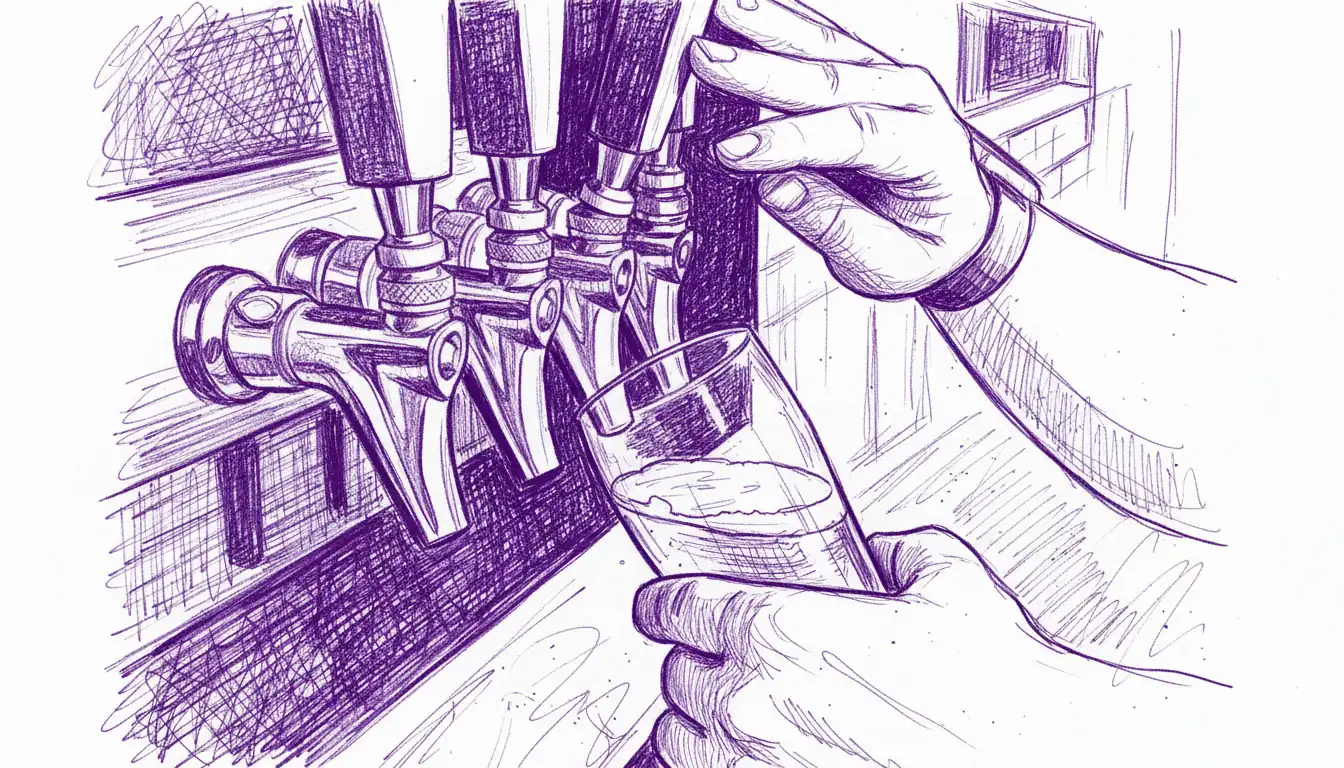
A brewery closed. Filippo had been going there for years with his friends. Good beer, the kind of place you don't think about losing until it's gone. It didn't close because the beer was bad. It closed because nobody could find it online.
He kept asking himself if he could have done something. That question took three years to answer.
A Developer Who Needed to Get Lost First
Filippo studied HTML, CSS and JavaScript at a private academy almost ten years ago. He didn't find a tech job right away, spent years doing something else entirely, supermarkets, retail, work that paid the bills but didn't go anywhere near what he'd studied. It wasn't until 2023 that he pushed hard enough to land a job as a web developer at a studio.
By March 2025, he quit.
Not because something went wrong. More because nothing felt right. He took what he calls "a long pause" and spent the better part of a year disappearing: the Camino de Santiago on foot, grape harvesting in Austria, then Taiwan, first as a tourist, then as a volunteer in a hostel.
It was in Jiufen, on a quiet evening, that a conversation changed things. He met a girl, half Canadian, half Taiwanese, who mentioned her boyfriend. Also a developer, also someone who had pivoted toward AI and found something he actually cared about.
"I saw a crack of light," Filippo says. "I thought maybe I could give this thing a chance."
He spent his free time in Taiwan reading everything he could about AI. Not the surface-level stuff, the actual mechanics of building with it. By the time he came back, he had a direction.
Building the Tool He Wished Had Existed
GetRankly.app does one specific thing: it scans the digital identity of restaurants and pubs, scores it, and tells the owner exactly what's broken and how to fix it.
Google presence, reviews, social profiles, website, everything that determines whether a potential customer finds you or walks past you to the place that shows up first. The tool doesn't just flag problems. It explains what to do about them, in plain language, without assuming the owner has any technical background.
"Most of these businesses don't even know they have a problem," Filippo says. "They're focused on the food, the service, the day-to-day. The digital side is the last thing on their mind. And sometimes that's exactly what's killing them."
The irony of building it alone wasn't lost on him. He used AI tools extensively, Claude, primarily, and hit the limits constantly. Out of credits at the wrong moment, waiting hours to continue a critical section. "I organized myself badly in that phase," he admits. "Several times I had to just stop and wait."
But he finished it.
The Harder Problem
Finishing it was when the real difficulty started.
"I put it online and realized that building it wasn't the hard part. Getting to the people who actually need it, that's the hard part."
The audience is fragmented and largely unaware. Pub owners aren't browsing Product Hunt. Restaurant managers aren't on indie hacker forums. They're running kitchens, managing staff, dealing with suppliers. The idea that their Google profile might be the reason tables are empty on a Tuesday night isn't something most of them have considered.
Filippo is working on the distribution problem now. Methodically. One step at a time.
"Building a startup is like climbing a staircase," he says. "If you look at the whole thing, at every single step ahead of you, it's terrifying. But if you focus on one step at a time, the staircase stops being scary. At some point you look back and realize you've climbed further than you ever thought you would."
What He's Building Toward
The plan isn't to flip it or exit it. The plan is to keep building it.
"I don't want to separate from it," Filippo says. "The story it comes from is too personal. I want it to grow, to cover more categories, to help more businesses that deserve to stay open."
He thinks about the brewery often. Not with regret exactly, more as a compass. A reminder of what the tool is actually for, and who it's actually for.
There are places out there right now that are good, that are worth saving, that are slowly becoming invisible because nobody told them their digital presence was broken. GetRankly exists for them.
The staircase is long. Filippo is climbing it one step at a time.
GetRankly.app is free to try.
Currently supports restaurants and pubs, with more categories planned.